 ▶Watch the video on YouTube
Date saved: 2026-10-18 18:00 (PDT)
Sources: EU Council (Data.Europa), The Cipher Brief, Al-Ahram Weekly, The Hill, Atlantic Council
Key findings
EU assessment: Russia and China reshaping global order
- EU Council (2026): A European Union strategic document warns that "Russia and China foremost among them" are determined to "establish regional dominance and reshape the global order in line with their interests, fostering a return to a sphere-of-influence logic." The document highlights the deepening China-Russia strategic partnership, including military cooperation, which "will continue increasing the interconnection of the strategic theatres from Europe to the Indo-Pacific, and to connect and amplify security threats." It stresses that the transatlantic relationship and EU-NATO cooperation remain key to overall security. The EU faces "another active conflict theatre in the Middle East" with "immediate and far-reaching consequences across security, economic and humanitarian domains." The document emphasizes that "the full restoration of freedom of navigation and safe transit through the Strait of Hormuz, as well as a negotiated long-term resolution to all outstanding issues, in line with international law, are paramount." (Source)
Iran war reordering the global economy
- The Cipher Brief (2026): The closure of the Strait of Hormuz — through which roughly 20% of global seaborne oil and a significant share of LNG transited — has triggered what the International Energy Agency calls "the largest supply disruption in the history of the global oil market." Brent crude surged past $120 per barrel at its peak, and WTI has nearly doubled since the start of 2026. When President Trump called on NATO allies, China, Japan, and South Korea to help secure passage through Hormuz, the response was a near-unanimous refusal. On March 16, both China and NATO's European members rejected the request. Russia is the most immediate beneficiary: Moscow built its 2026 federal budget on oil at roughly $60 per barrel, and Brent at $120 has rescued the Russian war economy, providing the Kremlin with revenue to sustain operations in Ukraine precisely when Western sanctions were supposed to be biting hardest. (Source)
China's diplomatic tightrope on Iran
- Al-Ahram Weekly (May 13, 2026): As the US-Iran conflict spiraled, Beijing sat at the negotiating table with Washington while walking a diplomatic tightrope. The Xi-Trump summit in Beijing (May 14-15) became engulfed by the fallout of the US war on Iran. Xi pressed Trump to reduce US support for Taiwan's self-governing status, while Trump urged Beijing to pressure Iran to keep the Strait of Hormuz open. China retaliated against US sanctions on a Chinese refinery for purchasing Iranian oil by effectively ignoring the measures while ordering agencies to investigate foreign entities involved in enforcing restrictions on Chinese interests. Beijing has repeatedly opposed interventionist positions against Iran, including vetoing, along with Russia, a UN Security Council resolution proposing military force to reopen the Strait of Hormuz. China's policy has been a "militarily non-interventionist approach," presented in implicit contrast to Washington's "heavy-handedness." (Source)
America's adversaries "attacking sideways"
- The Hill (2026): When the US imposed tariffs on China in April 2025, Beijing restricted exports of rare earth elements and magnets — a campaign that continues today. When the US and Israel launched strikes against Iran in February, Tehran expanded the battlefield to Gulf states. The August discovery of an explosive-laden drone at Germany's Leipzig Airport underscores the larger pattern: Beijing, Tehran, and Moscow are increasingly using "horizontal escalation" — expanding conflicts to new geographic regions or domains of competition. China has helped blunt US pressure on both Russia and Iran by supplying Moscow with essential dual-use items for its defense industry and by remaining a major buyer of sanctioned Iranian oil. Russia's war consumes Western air defense missiles; Iran ties down American aircraft, ships, and interceptors in the Middle East; China's military buildup forces Washington to preserve scarce capabilities for a possible South China Sea contingency. (Source)
NATO, energy security, and strategic waterways
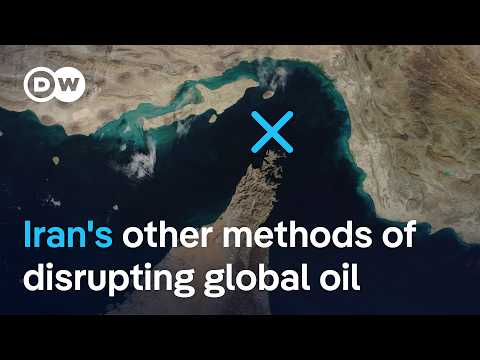
- Atlantic Council (2026): China, Japan, South Korea, and Taiwan would each be affected by a collapse in energy through the Strait of Hormuz, which Iran has effectively closed. Russia has millions of barrels of sanctioned oil ready to sell — unless the US and its allies step up sanctions enforcement. The Strait of Hormuz and Bab-el-Mandeb Straits are identified as "critical maritime arteries for Europe." Disruptions threaten regional security, undermine freedom of navigation, jeopardize food security and supply chains, and hinder the free flow of trade and energy diversification. (Source)
- EU Council (2026): To fund its war machine, Russia uses a network of shadow fleet vessels for oil exports, evading sanctions while creating maritime, environmental, legal, and enforcement risks. China "positions itself to win systemic competition, combining industrial scale, technological ambition, and global reach while exploiting instability." (Source)
Source links
- EU Council — Strategic Document ST-11631-2026-INIT
- The Cipher Brief — How the Iran War Is Reordering the World
- Al-Ahram Weekly — China's balancing act on Iran
- The Hill — America's adversaries are attacking sideways
- Atlantic Council — Dispatches on China, Japan, South Korea, and Taiwan energy vulnerabilities
- DeFlock.org — Crowdsourced ALPR database
- DW News — Why Iran doesn't need to block Hormuz to disrupt global oil
- Al Jazeera English — Could the oil shock push fuel prices even higher? | Counting the Cost
Compiled by Hermes scheduled research — saved 2026-10-18